The relationship between alcohol and tinnitus operates on two different timescales. In the short term, acute alcohol intake produces physiological changes that can temporarily alter tinnitus perception. Over the long term, heavy alcohol use is linked to hearing loss through vascular and neurotoxic mechanisms. These are distinct effects worth separating.
Acute effects: what happens after drinking
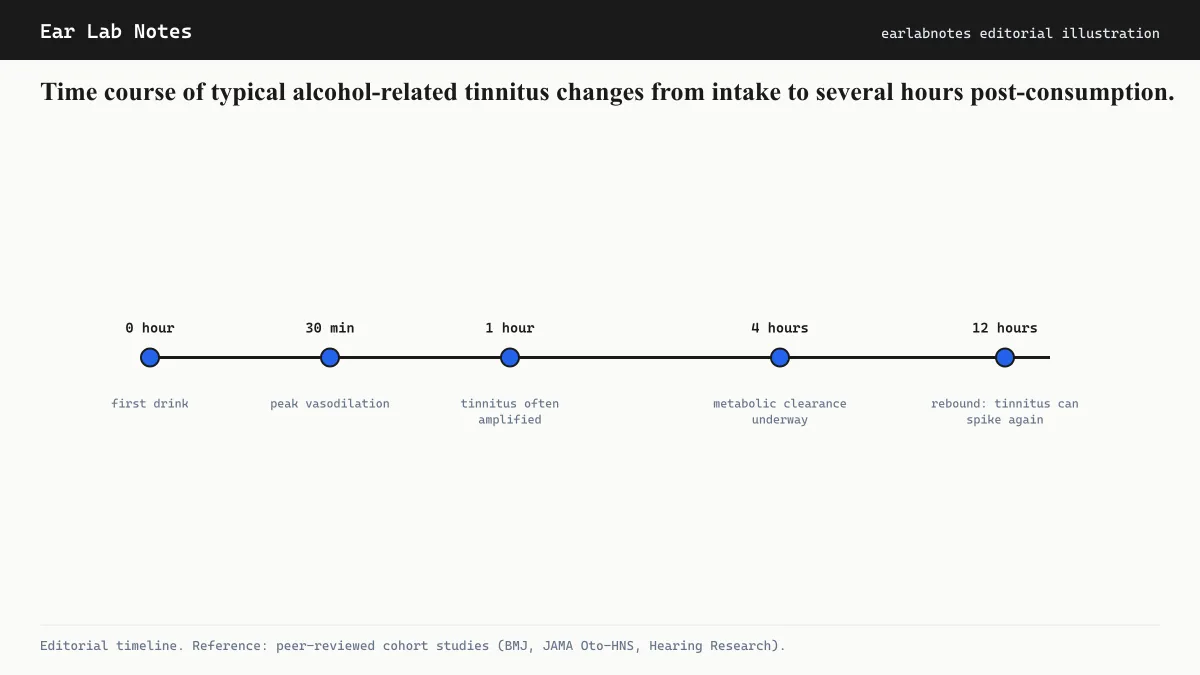
When alcohol enters the bloodstream, it causes vasodilation. Blood vessels widen, blood flow increases, and this affects the inner ear as much as the rest of the body.
The cochlea has a rich blood supply through the labyrinthine artery. Changes in cochlear blood flow affect how the fluid-filled chambers of the inner ear function and can temporarily alter hearing and tinnitus perception. Some people notice tinnitus becoming more prominent during or shortly after drinking, which is consistent with this mechanism.
Alcohol also affects central nervous system processing. It alters neural inhibition, changes how the brain filters incoming signals, and can affect auditory processing at multiple levels. For someone with existing tinnitus, these central changes may shift how the phantom sound is processed and perceived.
The dehydration factor
Alcohol is a diuretic. As blood alcohol levels rise, the kidneys excrete more water, leading to net dehydration. The inner ear’s fluid compartments, endolymph and perilymph, are tightly regulated, but systemic dehydration does affect circulating fluid balance.
Severe dehydration is known to exacerbate certain conditions involving endolymphatic pressure, including Meniere’s disease, which features tinnitus as a core symptom. For most people without Meniere’s, the dehydration effect on tinnitus is more modest and temporary.
The aftermath of significant alcohol intake, including the following morning, involves dehydration alongside sleep disruption and elevated stress hormones. Any or all of these can worsen tinnitus perception independently of the direct effects of alcohol.
Long-term effects: alcohol and hearing loss
Heavy alcohol use over years is associated with hearing loss in the medical literature. The mechanisms proposed include vascular damage to the cochlea’s blood supply, neurotoxic effects on auditory neural pathways, and nutritional deficiencies that accompany chronic heavy drinking.
Since tinnitus is strongly associated with hearing loss, anything that contributes to hearing loss is indirectly relevant to tinnitus risk. This is a different relationship from the acute effect described above.
The BTA notes that heavy alcohol use appears in the list of factors associated with tinnitus, though the relationship is complex and involves multiple mediating factors rather than a simple direct link.
Individual variation
Not everyone with tinnitus notices a worsening from alcohol. The response varies based on the type and severity of underlying hearing loss, the amount consumed, individual metabolism, hydration status, and the broader context of sleep and stress around the drinking occasion.
People who consistently notice their tinnitus worsening with alcohol are observing a real pattern in their own physiology, even if population-level evidence is mixed. That self-observation is worth discussing with a clinician as part of the overall management picture.
Context in relation to tinnitus guidelines
Major clinical guidelines for tinnitus, including the AAO-HNS clinical practice guideline, do not specifically prohibit alcohol or establish a defined threshold. The evidence base for specific dietary modifications in tinnitus management is generally limited, and guidelines tend to recommend against overly restrictive recommendations without sufficient evidence.
The Mayo Clinic’s tinnitus overview mentions that some people find certain substances, including alcohol, appear to affect their tinnitus, and suggests noting personal patterns. This is a reasonable framework: awareness of individual response is more useful than blanket rules.
General public health guidance on alcohol intake, such as that from the NHS, is relevant on its own terms regardless of tinnitus. Alcohol at low to moderate levels is not specifically contraindicated for tinnitus based on current evidence. Heavy or chronic use carries risks that extend well beyond tinnitus.
Practical observations
For people with tinnitus who drink alcohol occasionally and notice a temporary increase in their tinnitus, this is likely related to vasodilation, central neural changes, or subsequent sleep disruption. The effect is generally temporary.
Staying well hydrated while drinking alcohol, avoiding late-night or high-volume drinking that disrupts sleep, and managing next-day fatigue and stress are practical considerations that may reduce the indirect effects on tinnitus.
People with conditions such as Meniere’s disease, where endolymphatic pressure is directly relevant, have more specific reasons to be cautious about factors affecting fluid balance, including alcohol and dehydration. This is worth discussing with the specialist managing that condition.
If symptoms persist or change, see an audiologist or physician.
Related notes
Frequently asked
Questions readers ask
- Why does alcohol sometimes make tinnitus louder?
- Alcohol causes blood vessel dilation, including in the cochlea and brain, which can temporarily increase blood flow-related noise and change central auditory processing. Dehydration following alcohol intake also affects inner ear fluid balance.
- Does everyone with tinnitus experience worsening from alcohol?
- No. The response to alcohol varies considerably between individuals. Some people report temporary increases in tinnitus during or after drinking; others notice no change. A consistent personal pattern is more informative than population averages.
- Does long-term heavy alcohol use cause tinnitus?
- Long-term heavy alcohol use is associated with hearing loss through vascular and neurotoxic mechanisms, and tinnitus often accompanies hearing loss. The relationship is correlational rather than a direct cause established in controlled experiments.
- What about the morning after drinking?
- Hangover involves dehydration, disrupted sleep, and elevated stress hormones. All three factors can temporarily worsen tinnitus perception. The next-day effect may be more related to these secondary factors than to alcohol directly.
- Is any amount of alcohol safe with tinnitus?
- There is no established safe threshold or prohibition based on tinnitus alone in published clinical guidelines. Alcohol's effects on tinnitus are individual and context-dependent. People who notice a consistent worsening should discuss this with their clinician.
Primary sources
Where this comes from
- ◆Tinnitus · National Institute on Deafness and Other Communication Disorders (NIDCD)
- ◆Tinnitus: Symptoms and Causes · Mayo Clinic
- ◆Lifestyle and Tinnitus · British Tinnitus Association (BTA)
- ◆Tinnitus · NHS UK
Educational use only.
If your symptoms persist or change, see a licensed audiologist or otolaryngologist. Sudden hearing loss is a medical emergency, see a clinician within 72 hours.
TEL-N002 · The Ear Lab · earlabs.app