Category 01 · Hearing aids
Hear speech more clearly.
Compare OTC and clinician-fitted hearing aids by hearing status, fit, controls, and support after purchase. The guide does not pick a device for your case.
Read the hearing-aid guide →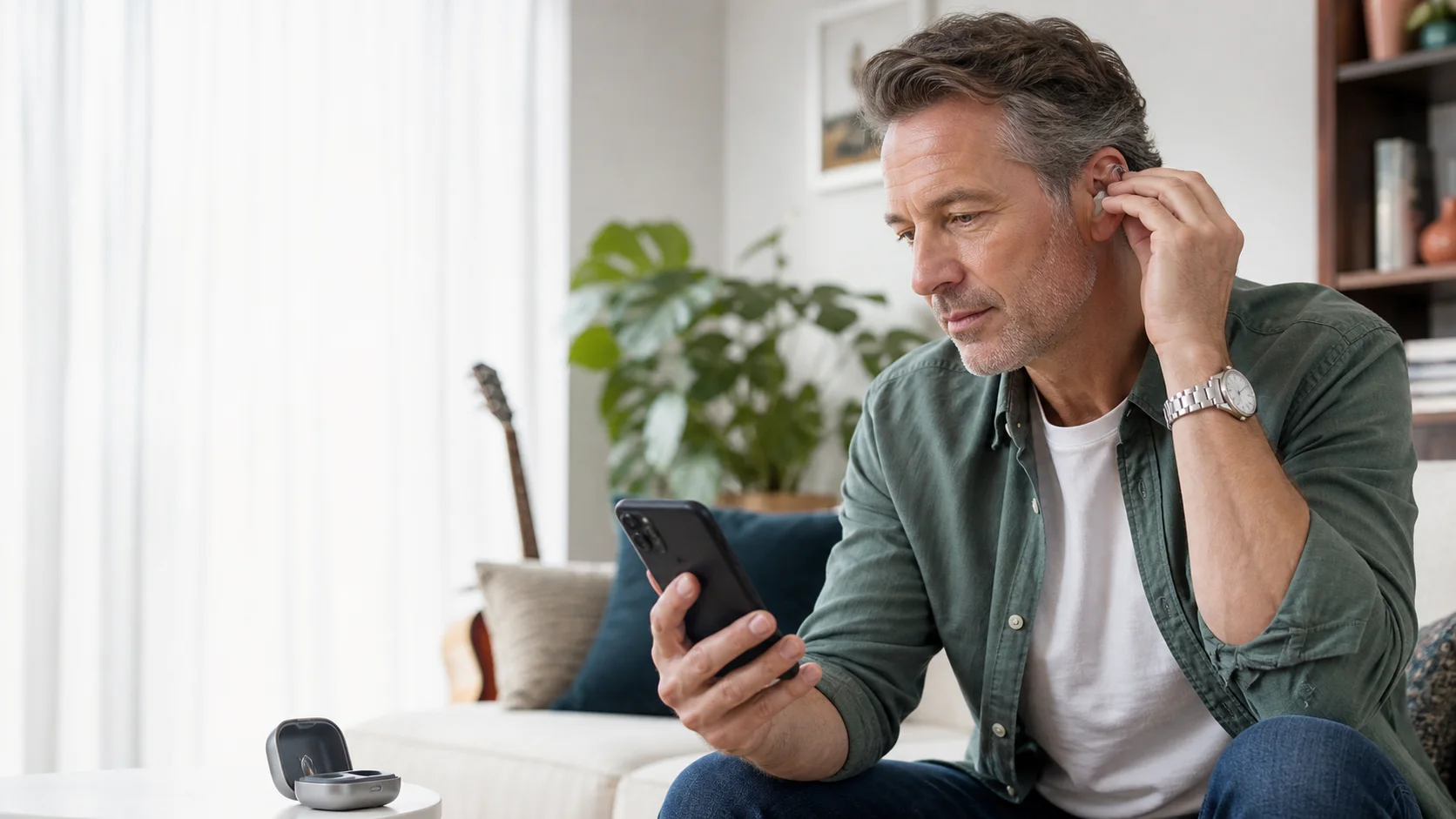
Independent hearing and tinnitus guidance
Understand a hearing result, find practical tinnitus help, and compare hearing aids, apps, or protection without fake tests or cure claims.
Source-backed guides · 7 free browser tools · Educational, not clinical advice
Start here
Choose the closest question. Each path starts with a plain answer and shows its sources and limits.
Hearing tests
Learn what the lines, symbols, and thresholds on an audiogram mean before your next conversation.
Explain my audiogramTinnitus
Start with practical help for sleep, sound, triggers, and the symptoms that need medical attention.
Start with tinnitus and sleepNoise protection
Match earplugs or earmuffs to the noise, fit, duration, and place where you will use them.
Compare hearing protectionBuying help
Check purpose, evidence, fit, limits, ongoing cost, and support before you choose a product.
Open the buying guidesPrimary sources. Key claims link to NIH, NIDCD, NIOSH, NHS, Mayo Clinic, or professional guidance.
Working tools. Audio tools run in your browser and state what their result can and cannot tell you.
Clear commercial links. Affiliate routes are labeled, and a paid link does not decide the editorial conclusion.
Shopping help
Start with what you need the product to do. Then check the evidence, fit, limits, total cost, and support before you buy.
Category 01 · Hearing aids
Compare OTC and clinician-fitted hearing aids by hearing status, fit, controls, and support after purchase. The guide does not pick a device for your case.
Read the hearing-aid guide →Category 02 · Sound support
Sound apps and sound enrichment can serve different jobs, such as background sound, sleep, or tracking. Check the feature, volume control, timer, privacy, and evidence.
Read the sound-app guide →Category 03 · Hearing protection
Compare reusable earplugs, filtered protectors, and earmuffs by exposure, fit, communication, and the setting where you will actually wear them.
Read the protection guide →Category 04 · Tinnitus supplements
Evidence for tinnitus supplements is weak. No supplement is proven to treat or cure tinnitus. Test for a documented deficiency before treating a pill as a plan.
Read the evidence note →Existing tracked routes · not medical recommendations
01 Name the job before the product.
02 Check that the evidence matches the claim.
03 Keep the route, terms, and limits visible.
Free hearing tools
Each tool explains its method and limits. Calculations and audio generation stay in your browser, with no account or upload.
TEL-T01
Standard audiology pure-tone matching with an octave-confusion check. Save the result and download a PDF.
TEL-T02
NIOSH + OSHA daily-dose check against published limits, with the time-to-100% reference.
TEL-T03
A logarithmic sweep from 8 to 20 kHz with ISO 7029 comparison. Tap when you stop hearing the tone.
TEL-T04
Copy thresholds from an audiogram and compare the standard PTA with the WHO 4-frequency better-ear method.
TEL-T05
Save loudness, distress, sleep, stress, and notes in this browser, then view a seven-entry trend or export a CSV.
TEL-T06
See the common air, bone, masking, and no-response marks side by side and filter the key by test type.
TEL-T07
Copy one ear from an existing audiogram onto an illustrative speech region, with clear limits on what the chart can show.
TEL-T08
Broadband noise with a 1/3-octave notch centered on your matched pitch forthcoming
The Ear Lab Notes · weekly
Plain-language summaries of new tinnitus and hearing research, useful primary sources, and updates when we ship a new instrument. From the editors behind @TheEarLab.
Hearing guide library
TEL-N016 · Frequencies
Read hearing test results step by step. Decode audiogram symbols, the dB-HL and frequency axes, air versus bone conduction, masking, and the speech banana.
Read note →TEL-N042 · Management
Sleep deprivation worsens tinnitus and tinnitus worsens sleep. Cognitive, environmental, and behavioral interventions with the strongest evidence for breaking the feedbac...
Read note →TEL-N057 · Lifestyle
Noise Reduction Rating is a laboratory label, not a personal result. Learn how fit testing, comfort, noise level, and consistent use guide protector choice.
Read note →The index
All notes, by topic
Before you buy
Our decision guides keep category, evidence, fit, limits, and support in the same frame. No five-star badges, fake tests, or paid editorial conclusions.
Video explainers
Short video explainers on tinnitus, hearing, and the strange biology of the ear. Same editorial team.